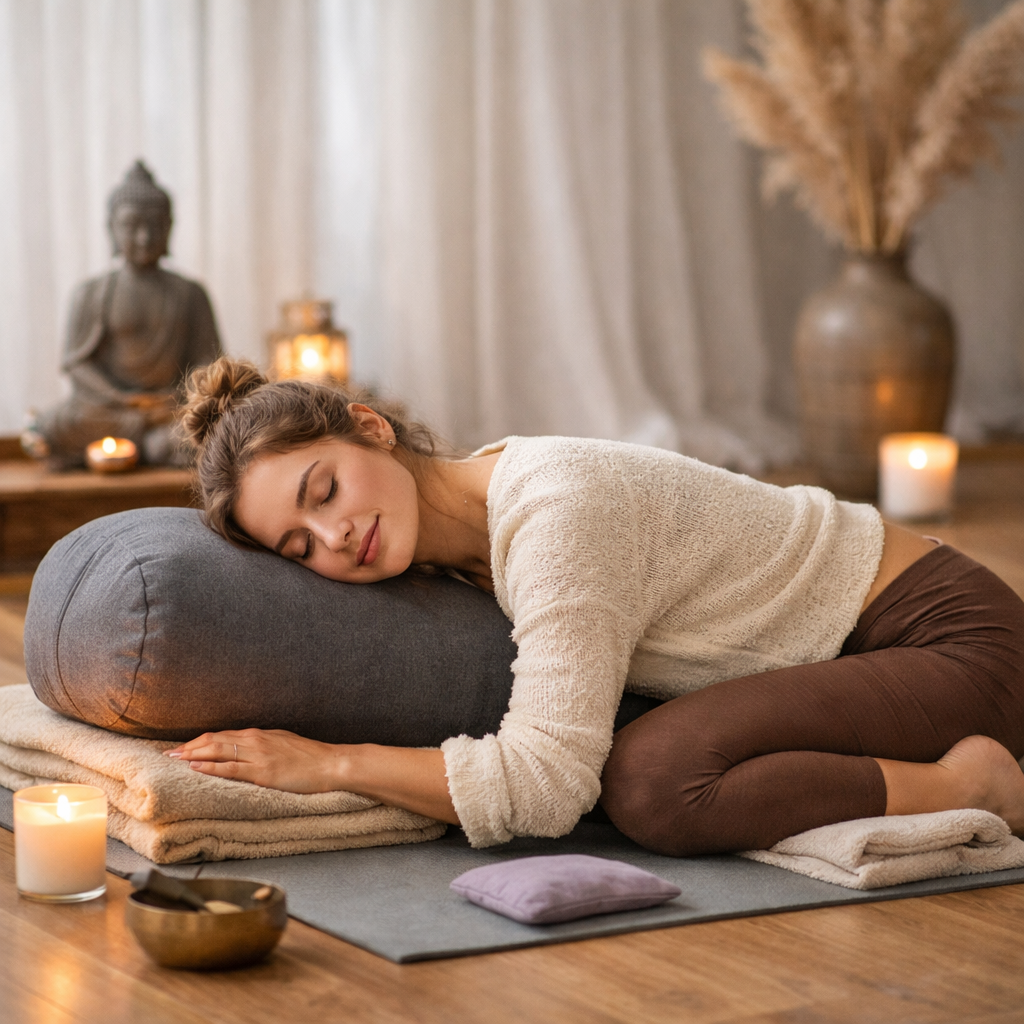
Why Psychiatrists Believe Restorative Yoga Is Essential for Nervous System Regulation
Introduction
Modern life keeps most people locked in a low grade state of alertness. Notifications ping, deadlines pile up, and the body rarely gets a genuine signal that it is safe to rest. Over time, this constant low hum of stress reshapes how the nervous system responds to everyday demands, making calm feel like a distant memory rather than a default state.
This is exactly why a growing number of psychiatrists and mental health clinicians are pointing to restorative yoga as more than a relaxing hobby. They see it as a legitimate, evidence supported tool for retraining the nervous system to move out of chronic fight or flight mode and back into a state of balance. Unlike vigorous forms of yoga that build strength and stamina, restorative yoga is slow, supported, and deliberately undemanding. Poses are held for several minutes at a time, props like bolsters and blankets cradle the body, and the goal is not to stretch harder but to let go completely.
In this article, we will explore why restorative yoga has earned this kind of clinical respect, how it interacts with the body’s stress response systems, and what makes it different from other relaxation techniques. We will also look at practical ways to bring restorative yoga into a mental health routine, whether you work with a therapist in person or consult a virtual psychiatrist for ongoing support.
Understanding the Nervous System’s Role in Mental Health
To understand why restorative yoga matters so much, it helps to first understand what the nervous system is actually doing when someone feels anxious, overwhelmed, or emotionally flat.
The autonomic nervous system has two main branches. The sympathetic branch triggers the fight or flight response, releasing cortisol and adrenaline so the body can react quickly to danger. The parasympathetic branch does the opposite. It slows the heart rate, lowers blood pressure, and supports digestion and repair. Psychiatrists often refer to this second branch as the rest and digest system, because it is responsible for recovery after stress has passed.
Problems arise when the sympathetic branch stays switched on for too long. Chronic stress, unresolved trauma, and ongoing anxiety can keep a person stuck in this activated state, even when there is no immediate threat present. The body begins to treat everyday situations, a full inbox, a crowded room, a difficult conversation, as if they were emergencies. This is where many common mental health symptoms originate: racing thoughts, muscle tension, disrupted sleep, digestive issues, and a persistent sense of unease that talk therapy alone sometimes struggles to fully resolve.
Psychiatrists increasingly recognize that thoughts and behavior are only part of the picture. The body needs its own pathway back to safety, and this is precisely the gap that restorative yoga is designed to fill. By deliberately activating the parasympathetic nervous system through stillness, supported posture, and slow breathing, restorative yoga gives the body direct, physical evidence that it is no longer under threat.
How Restorative Yoga Physically Calms the Body
Restorative yoga works through several interconnected mechanisms, each targeting a different piece of the stress response.
Extended holds and deep relaxation. Traditional yoga styles move through poses fairly quickly, which keeps the body somewhat engaged and alert. Restorative yoga takes the opposite approach. Poses are held for five to twenty minutes, often fully supported by props so that no muscular effort is required. This extended stillness signals to the brain that there is no need to stay braced or ready to move, which allows the nervous system to gradually downshift.
Diaphragmatic breathing. Nearly every restorative yoga sequence emphasizes slow, deep breathing from the diaphragm rather than the chest. This type of breathing directly stimulates the vagus nerve, a major communication pathway between the brain and body that plays a central role in activating the parasympathetic response. Psychiatrists who study vagal tone note that people with higher vagal tone tend to recover from stress more efficiently and show greater emotional resilience over time.
Reduced muscular tension. Chronic stress often shows up physically as tightness in the shoulders, jaw, and lower back. Because restorative yoga uses props to fully support the body’s weight, muscles are given permission to release rather than continuing to hold and brace. This physical release frequently produces a corresponding mental release, since the body and mind are deeply intertwined feedback loops rather than separate systems.
Interoceptive awareness. Restorative yoga also builds interoception, which is the ability to notice and interpret internal bodily sensations. Many anxiety and mood disorders are linked to poor interoceptive awareness, where people struggle to recognize early signs of stress until they become overwhelming. Practicing stillness and paying attention to breath and sensation helps rebuild this internal awareness, giving people earlier warning signs and more agency in managing their stress response.
Together, these mechanisms explain why a single restorative yoga session can lower cortisol levels, reduce heart rate, and leave practitioners reporting a noticeable shift in mood, often within a single hour long class.
Why Psychiatrists Recommend It Alongside Traditional Treatment
Psychiatrists are not suggesting that restorative yoga should replace medication, psychotherapy, or other established treatments. Rather, they view it as a complementary practice that strengthens the foundation on which other treatments work.
It addresses the body, not just the mind. Cognitive approaches like talk therapy primarily work through language and reasoning. Medication works at a neurochemical level. Restorative yoga offers something different: a direct, somatic pathway to regulation that does not depend on cognitive insight. For people who find it hard to talk about or even identify their emotions, this can be an especially valuable entry point into healing.
It supports trauma recovery. Clinicians who specialize in trauma frequently point out that traumatic experiences are stored in the body as much as in memory. Restorative yoga, particularly when taught with trauma sensitive language and plenty of choice around touch and positioning, offers a gentle way to reconnect with the body in a setting that feels safe and controlled. This can make it a useful adjunct for people working through post-traumatic stress.
It reduces reliance on avoidance. Anxiety often drives people to avoid situations or sensations that feel uncomfortable. Restorative yoga gently encourages people to sit with stillness and internal sensation, in a low stakes setting, which can build tolerance for discomfort over time. This mirrors some of the goals of exposure based therapeutic techniques, though through a much gentler and more physical route.
It is accessible and sustainable. Unlike high intensity exercise, restorative yoga does not require significant physical fitness, and it carries a low risk of injury. This makes it appropriate for a wide range of people, including those managing chronic illness, older adults, and individuals recovering from burnout. Because sessions are gentle, people are also more likely to stick with the practice long term, and consistency is often what determines whether a nervous system regulation strategy actually produces lasting benefits.
Many psychiatrists now discuss lifestyle interventions like restorative yoga during routine appointments, whether those appointments happen in a traditional office or through a virtual psychiatrist consultation. The flexibility of telehealth has made it easier for clinicians to check in more frequently and encourage patients to build these practices into daily life, rather than treating them as an occasional afterthought.
Bringing Restorative Yoga Into Your Own Routine
For anyone interested in exploring restorative yoga as part of their mental health care, a few practical steps can make the transition smoother.
Start small and stay consistent. A single twenty minute session a few times a week can produce noticeable benefits. Consistency matters more than duration, since the nervous system responds well to repeated, predictable signals of safety.
Use accessible props. Bolsters, blankets, and cushions are common in studio classes, but ordinary pillows and folded towels work just as well at home. The goal is full physical support so that no muscle needs to work.
Focus on the breath. Even without formal instruction, slowing the exhale to be longer than the inhale can help activate the parasympathetic response. A simple pattern of inhaling for four counts and exhaling for six or eight counts is a good starting point.
Pair it with other supportive practices. Restorative yoga tends to work well alongside mindfulness meditation, regular sleep routines, and time spent outdoors. These practices reinforce one another and build a broader foundation of nervous system resilience.
Talk to a professional if symptoms persist. Restorative yoga is a powerful supportive tool, but it is not a substitute for clinical care when symptoms are severe or persistent. Anyone dealing with significant anxiety, depression, or trauma symptoms should continue working with a licensed mental health provider, who can help integrate practices like restorative yoga into a broader, personalized treatment plan.
Conclusion
The growing psychiatric interest in restorative yoga reflects a broader shift in how mental health professionals understand healing. Regulation is not something that happens through thought alone; it happens through the body, breath by breath, and moment by moment. Restorative yoga offers a structured, gentle, and remarkably effective way to give the nervous system the rest it has often been missing for years.
Whether practiced at home with a few pillows on the floor or as part of a guided class, restorative yoga provides real physiological benefits that complement traditional mental health treatment rather than compete with it. As more clinicians recognize the connection between body and mind, practices like this are moving from the wellness fringe into mainstream, evidence informed care.
beginner yoga, health, restorative yoga, stress, stress relief, wellness, yoga benefits, yoga practice